

Relocating to the San Francisco Bay Area with your family involves more than finding a new home. Between visiting neighborhoods, enrolling children in school, commuting to work, buying household essentials, and learning your way around a new region, reliable transportation can make the first few weeks or months considerably easier.
For families who do not want to purchase or ship a vehicle immediately, renting a car can provide flexibility during the transition. Having a vehicle available gives you time to understand your family's transportation needs while settling into a new routine, particularly if you're moving to a suburban community or traveling frequently between different parts of the Bay Area.
Why Renting a Car Can Make Family Relocation Easier
The first weeks after a move often involve more driving than expected. Your family may need to visit potential homes, attend school appointments, shop for furniture, pick up household supplies, travel to work, and explore different neighborhoods. Depending entirely on public transportation or rideshare services can become inconvenient when several stops are involved.
A rental car gives families control over their schedules while they get established. Instead of immediately committing to purchasing a vehicle, you can spend time learning how often you drive, how far you commute, and what type of vehicle fits your household. This can be especially helpful for corporate relocations, temporary assignments, and families arriving before their permanent transportation arrangements are finalized.
Consider a Long-Term Rental Instead of Repeated Short-Term Rentals
If your relocation period will last several weeks or months, repeatedly arranging short rentals may not be the most practical solution. A longer rental period means your family can keep the same vehicle available for everyday errands, school transportation, commuting, appointments, and weekend activities without continually returning and replacing cars.
Families who need transportation throughout their transition can consider amonthly and long-term car rental in the Bay Area. This type of arrangement can be particularly useful while waiting for a personal vehicle to arrive, staying in temporary housing, completing a corporate assignment, or deciding whether purchasing a car makes sense after settling into the region.
Choose a Rental Vehicle That Fits Your Family
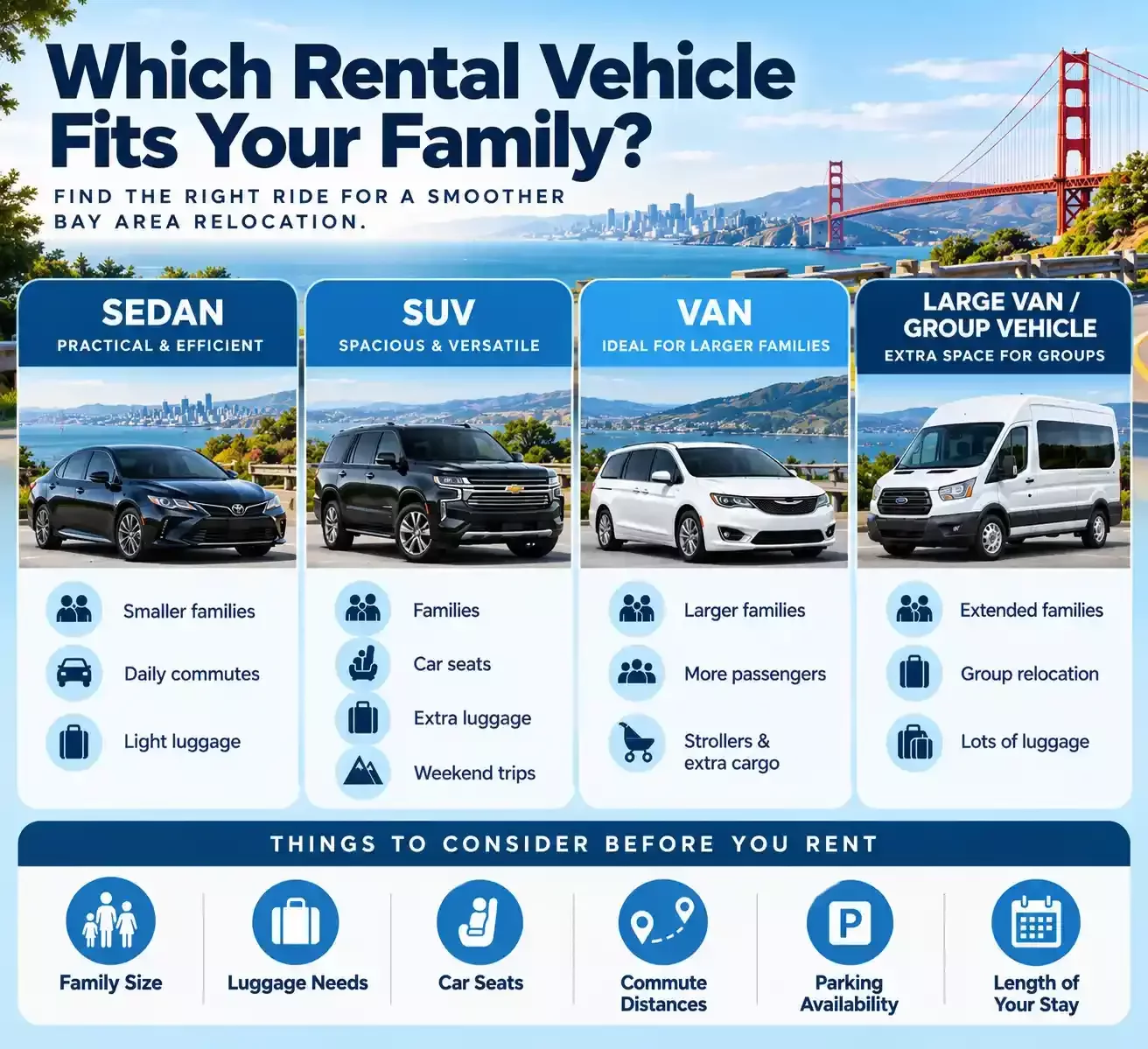
The right rental vehicle depends on more than the number of people in your household. Consider luggage, car seats, strollers, sports equipment, groceries, and anything else you'll regularly transport. A sedan may work well for a smaller family with a straightforward commute, while an SUV can provide additional passenger and cargo space.
Larger families may find a van more practical, particularly during the initial move when extra belongings tend to travel everywhere with you. Think beyond your first trip from the airport or temporary accommodation. Choosing a vehicle that comfortably handles your normal weekly routine can make the relocation period much less stressful.
Use Your Rental Car to Explore Bay Area Neighborhoods
Choosing where to live is one of the biggest decisions families make when relocating to the Bay Area. San Francisco, the Peninsula, Silicon Valley, the East Bay, South Bay, and North Bay each provide different lifestyles, commute patterns, housing options, and access to family amenities.
Having a rental vehicle makes it easier to explore several communities before signing a lease or purchasing a home. Drive through potential neighborhoods at different times, visit nearby grocery stores and parks, and see how long it takes to reach schools and workplaces. Experiencing these routes yourself can provide insights that are difficult to gain from maps and property listings alone.
Test Your Real Commute Before Choosing a Home
Distance can be misleading in the Bay Area. A neighborhood may appear relatively close to your workplace while still requiring a lengthy commute during busy periods. Bridges, freeways, school traffic, and major employment corridors can all influence how long a routine trip actually takes.
A rental car gives you an opportunity to test potential commutes before making a permanent housing decision. Try driving from neighborhoods you're considering to your workplace during the hours you expect to travel. Include school or childcare drop-offs where relevant, since the complete morning routine may matter more than the direct distance between home and work.
Make School and Childcare Transportation Easier
For parents, transportation decisions often revolve around children's schedules. School drop-offs, daycare, after-school programs, sports practices, medical appointments, and other activities can quickly create a complicated weekly calendar, particularly when a family is still unfamiliar with the area.
Keeping a rental car during the relocation period can provide consistency while you establish these routines. It also gives you time to determine whether your eventual home will allow you to rely partly on walking or public transportation or whether your family will benefit from owning one or more vehicles over the long term.
Plan for Airport Arrivals and Temporary Housing
Many family relocations begin with a stay in temporary housing before a permanent home is ready. During this period, your workplace, children's school, storage facility, and temporary accommodation may all be in different locations. Reliable transportation can help connect these pieces of the relocation process.
Families arriving through San Francisco International Airport, Oakland San Francisco Bay Airport, or San José Mineta International Airport should consider what happens after the initial airport journey. Transportation needs often continue for weeks or months, so planning beyond the arrival day can help prevent gaps while moving between temporary and permanent accommodations.
Consider Parking When Selecting a Home
Having a vehicle provides flexibility, but parking should be part of your housing decision. In denser areas of San Francisco, parking availability and costs can vary considerably. Some apartments include parking, while others may require separate arrangements or rely on street parking.
Parking can be easier in many suburban communities, although families should still confirm what is included with a property. If you are renting a car during your relocation, knowing where you can securely and conveniently park it each night will make daily life easier and can help you evaluate whether long-term vehicle ownership suits the neighborhood.
Budget for More Than the Rental Rate
When planning transportation expenses, look beyond the advertised cost of a vehicle. Fuel, parking, bridge tolls, insurance or protection options, and additional mileage considerations can all affect the overall transportation budget during a relocation.
Compare those expenses with the alternatives your family would otherwise use. Frequent rideshare trips, multiple airport transfers, or purchasing a vehicle immediately after moving can carry their own costs. Looking at your family's complete transportation needs over several weeks or months can help you choose an arrangement that provides the right balance of convenience and cost.
Use the Rental Period to Decide Whether to Buy a Car
One advantage of renting during a relocation is that you do not need to make an immediate vehicle purchase. Your family's transportation habits in the Bay Area may be very different from those in your previous city, particularly if your new home provides better access to public transportation or your employer offers flexible working arrangements.
After several weeks of commuting, school runs, errands, and weekend travel, you'll have a much clearer idea of what you need. You may discover that one family vehicle is sufficient, that you need more passenger or cargo space than expected, or that owning a car is less important in your chosen neighborhood. Renting gives you time to make that decision based on experience.
Make Weekend Exploration Part of Settling In
A rental car is useful for practical relocation tasks, but it can also help your family become familiar with Northern California. Once the moving boxes are unpacked, weekend drives can introduce children and parents to parks, beaches, hiking areas, museums, and communities throughout the Bay Area.
Families can also use their new location as a starting point for trips to destinations such as Santa Cruz, Monterey, Napa Valley, Sonoma County, and nearby redwood areas. Exploring together can provide a welcome break from relocation tasks while helping your family develop a stronger connection to your new home.
A More Flexible Way to Relocate to the Bay Area
Relocating to the Bay Area with your family comes with many decisions, and buying a vehicle does not have to be one of the first. Renting a car during the transition can provide dependable transportation while you explore neighborhoods, establish school routines, test commutes, and determine what your family's daily life will actually require.
The goal is to give your household enough flexibility to settle in without rushing permanent decisions. By choosing a rental vehicle suited to your family and planning for parking, commuting, and everyday travel, you can make transportation one less uncertainty during your move to the San Francisco Bay Area.
Key Takeaways
Renting a car can give families reliable transportation while settling into the Bay Area.
A long-term car rental can be practical for families staying in temporary housing or waiting for a personal vehicle to arrive.
Having a rental car makes it easier to explore neighborhoods, compare schools, test commute times, and manage everyday errands.
Sedans, SUVs, and vans offer different advantages depending on family size, luggage, car seats, and cargo needs.
Testing real commute routes before choosing a permanent home can help families make better relocation decisions.
Families should factor parking, fuel, tolls, and other transportation expenses into their relocation budget.


